Types of car radiator
The car radiator usually has two types:
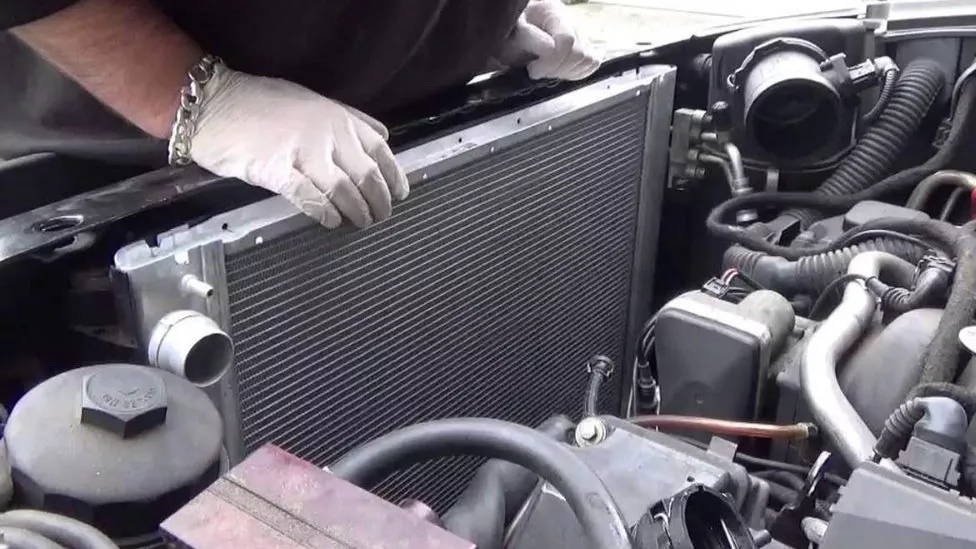
Fin tube radiator
In this type of car radiator, the cooling fins and the tubes containing water are arranged vertically and the tubes They pass through the fins.
Krogit radiator
In this type of car radiator, the fins have a wavy shape and instead of the tubes passing through the fins, these two sets are next to each other. They are placed together and the blades are connected to the tip of the fin. Crogit radiator has an easier manufacturing process and is used more often.
Application of Automotive Radiator
The most important application of the car radiator is engine cooling. Because combustion engines work based on internal explosions, these explosions produce very high heat and the engine cannot dissipate this intense heat without the help of a radiator. Therefore, the radiator receives the heat of the engine through the coolant and transfers it to the outside so that the engine becomes cooler and the metal parts of the engine are not damaged due to heat.
Importance of car radiator
The importance of the car radiator is so great that if the slightest problem occurs in the operation of this part, the engine may suffer costly problems such as cylinder head gasket burning, ring and piston damage, and even bearing damage. Therefore, it is very important and vital to have a radiator as well as to ensure the correctness of its operation in the car.
How the car radiator works
Car radiator works based on the principle of heat transfer from one fluid to another. The cooling liquid or radiator water is drawn into the engine ducts by the water pump. This liquid absorbs the heat caused by the engine's internal explosions and then moves to the thermostat. The accumulation of hot water behind the thermostat causes the thermostat valve to open and the water to be drawn from there to the internal channels of the radiator. As the water passes through the internal networks of the radiator, the heat of the radiator water reaches the blades. These blades are exposed to the ambient air as well as the wind caused by the radiator fan and transfer the heat of the engine to the air very quickly. After the relative cooling, the water in the radiator is drawn back into the engine with the help of the pressure created by the water pump to repeat the previous cycle again. If the components of the car's radiator system do not do their job properly, the car will boil and the negative consequences will affect you.
Time to check the car radiator
Checking the radiator does not have a specific time and we should always be aware of it. But if you encounter the following problems, be sure to check the car radiator for leaks, dirt, etc.:
If the engine is hot
If the coolant is leaking from around the radiator The car heater does not heat well
The reason for the depletion of the car's radiator water
Radiator water loss can be due to the following reasons:
Radiator seam leakage
Radiator tank hole
Cylinder head gasket burning
Incomplete radiator ventilation
Not using Antifreeze